
The blog
Custom Engraving Production Cost: No Flat Markup (2026)


There's no fixed number for how much custom engraving adds to production cost — the answer depends on technique, material, and how much text or artwork goes into each piece, not a flat percentage tacked onto the base product. The cost most merchants miss isn't the engraving pass itself; it's the proofing and file prep that happens before the tool ever touches the product, and that labor cost rarely shows up in a quoted per-unit price.
TL;DR
- How much does custom engraving add to production cost depends on technique, material, and text length — not a flat markup.
- Laser engraving is the cheapest technique to scale because the machine runs with almost no per-unit labor once the file is set.
- Hand engraving carries the highest labor cost and the lowest throughput, which is why it stays reserved for premium or heirloom pieces.
- Bespo lets Shopify merchants price personalisation by variant, so the engraving surcharge shows up before checkout instead of eating margin later.
Why this matters
Engraving is one of the most requested personalisation options on Shopify stores in 2026, especially in corporate gifting, jewelry, and drinkware. Merchants who charge one flat surcharge for every engraved item routinely lose margin on long text or complex logos, because cost scales with machine or labor time, not with the simple fact that engraving happened.
Getting the Bespo customisation setup right before launch — techniques, pricing rules, file output — saves a repricing exercise on every SKU after the first batch of orders lands. That's the practical reason this question matters more than it sounds.
How much does custom engraving add to production cost?
The honest answer: it depends on the technique, the material, and how much content goes into each piece. Laser engraving on wood, glass, or anodized metal adds the least cost because the machine runs unattended once it's set up. Hand engraving on solid metal — sterling silver, gold-filled pieces — adds the most cost because a trained engraver works every single order by hand.
Merchants who add engraved text options to Shopify products usually start by defining engraving as a live-preview option, then layer pricing logic on top once they know which technique they're actually fulfilling with.
Laser engraving
- Primary cost driver: Machine time per piece
- Setup effort: Low — mostly file setup
- Best for: High-volume runs with uniform text
Rotary / diamond-drag
- Primary cost driver: Tool wear and fixture time
- Setup effort: Medium — needs a jig
- Best for: Metal goods like flasks and cufflinks
Hand engraving
- Primary cost driver: Skilled labor hours
- Setup effort: High — no automation
- Best for: Low-volume, premium, heirloom pieces
Why the added cost varies
- Material hardness — steel and titanium need slower passes and more tool wear than wood, glass, or acrylic.
- Depth and complexity — a single name costs less machine time than a full crest or multi-line message.
- Technique — laser, rotary/diamond-drag, and hand engraving carry very different labor requirements per unit.
- Order volume — batching identical engravings cuts setup cost per unit; one-off custom orders don't get that benefit.
- Proofing and rework — customer-approved proofs catch errors before the machine runs, but the proofing step itself takes staff time.
- Fixture setup — irregular shapes like mugs or curved jewelry need custom holding fixtures that add time on the first run.
Laser engraving: cost driven by machine time, not labor
Laser engraving uses a computer-guided beam, so once the design file is loaded, the machine runs the job with minimal supervision. The main cost is machine time per piece plus consumables, and the upfront cost of preparing a clean vector file. That's why laser engraving scales well for Shopify orders — a batch of 50 identical name plates lands close to the same per-unit cost as a batch of 200, once setup is done.
Verdict: buy laser engraving for high-volume, uniform-text runs.
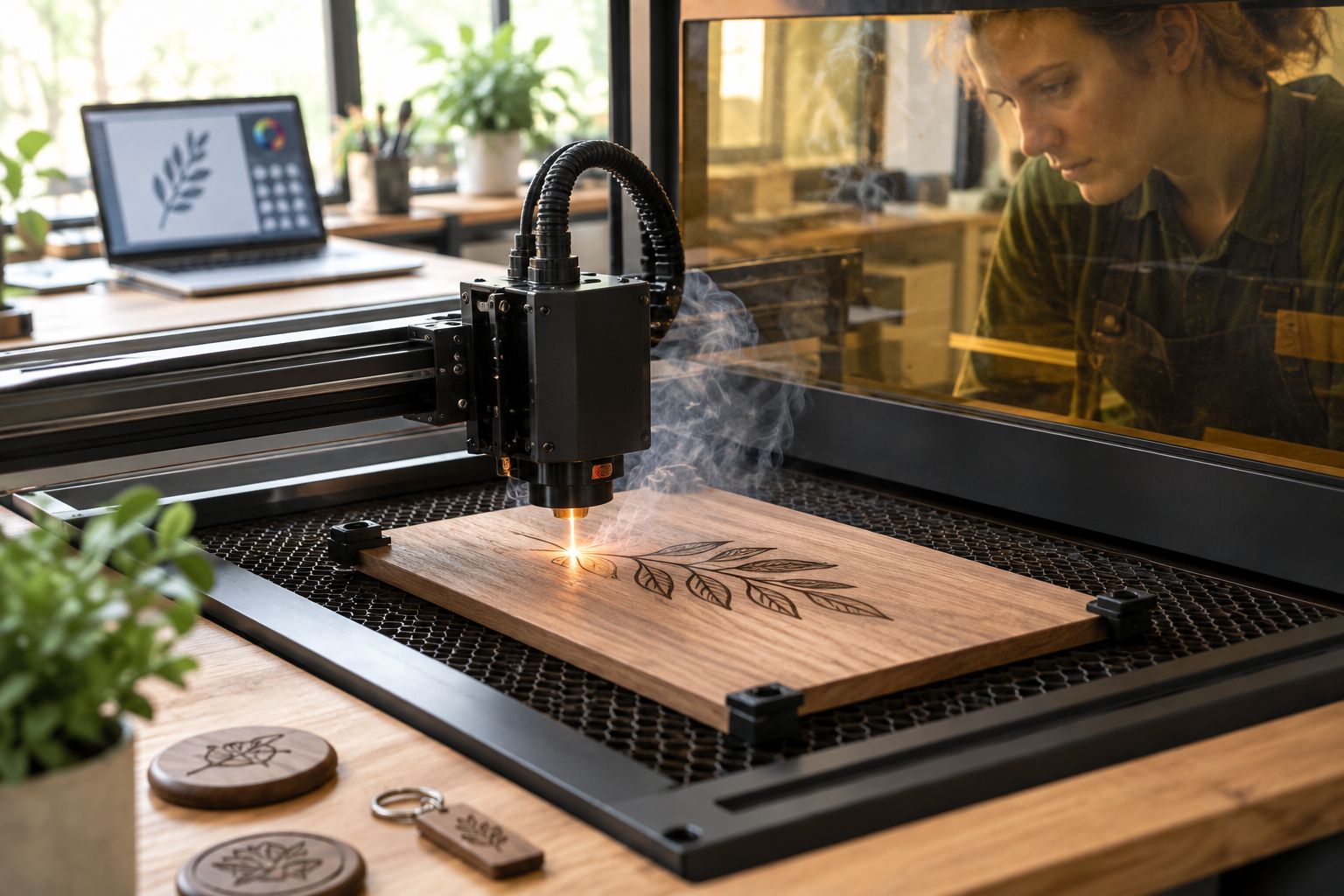
Once the file is loaded, laser engraving needs almost no per-piece labor.
Rotary and diamond-drag engraving: the middle ground
Rotary engraving uses a rotating cutting tool; diamond-drag drags a hardened point across metal. Both need more setup per job than laser — fixturing the piece so the tool tracks correctly — and they wear tools down faster on harder metals. Cost sits between laser and hand engraving: still machine-driven, but slower, with tool maintenance built into the price.
Verdict: hold rotary/diamond-drag for metal goods that don't need laser precision, like flasks and cufflinks.
Hand engraving: highest labor cost, lowest throughput
Hand engraving is done by a trained engraver working with a hand tool or pneumatic graver, one piece at a time. There's no batching it the way laser jobs batch — every piece takes the engraver's full attention for as long as the design takes. That labor cost is why hand engraving stays in premium categories: fine jewelry, watches, and heirloom gifts where the buyer expects to pay for craftsmanship.
Verdict: skip hand engraving for high-volume SKUs; keep it for premium, low-volume lines.
Is laser engraving cheaper than hand engraving?
Laser engraving is cheaper than hand engraving for almost any volume above a handful of units, because the machine doesn't need a skilled engraver's time on every piece. Hand engraving only competes on cost when order volume is so low that laser setup time outweighs the savings — a situation that's rare outside true one-offs.
Does engraving cost more than printing or embossing?
Engraving generally costs more than surface printing, because it removes or displaces material rather than adding ink or a decal, which takes more machine or hand time per piece. Embossing and debossing sit closer to engraving in cost when they need a custom die, but engraving usually still wins on flexibility since no die has to be made per design.
How do you price engraving into your product price?
Most Shopify merchants price engraving as a per-variant surcharge rather than folding it into the base price, so the checkout total reflects the actual work involved — a two-line name costs less machine time than a full paragraph, and the price should say so.
Bespo's live-preview customiser lets shoppers see the design and the price update together as they type, and merchants can price personalised products by variant instead of guessing at one flat engraving fee. Setting up that pricing logic takes roughly the same 5-minute setup Bespo uses for its other personalisation blocks — no developer required.
Price engraving by variant
Show the real engraving surcharge before checkout, not after.
FAQ
How much does custom engraving add to production cost?
Custom engraving adds cost through machine time, setup effort, and material — not a flat markup — so the number changes with technique and text length. Laser engraving on standard materials adds the least; hand engraving on solid metal adds the most.
Is laser engraving cheaper than hand engraving?
Laser engraving is cheaper than hand engraving for almost any order above a handful of units, since the machine needs no skilled labor per piece. Hand engraving only competes when volume is too low for laser setup time to pay off.
Does engraving cost more than printing?
Engraving generally costs more than surface printing because it displaces material rather than adding ink, which takes more time per piece. Embossing and debossing can approach engraving's cost once a custom die is involved.
Should I charge a flat engraving fee or price by text length?
Pricing by text length or design complexity protects margin better than a flat fee, because machine and labor time scale with what's actually being engraved. A flat fee overcharges short names and undercharges long messages.
Does engraving slow down production time?
Yes — engraving adds a dedicated step after the base product is made, and hand engraving adds the most time since it can't be batched. Laser engraving adds the least delay when jobs are batched by design.
Can Shopify merchants show engraving cost live at checkout?
Yes, a live-preview customiser like Bespo can update price as a shopper adds engraved text, so the surcharge is visible before they add to cart. This avoids cart abandonment caused by surprise pricing at checkout.
What's the biggest hidden cost in engraving personalisation?
The biggest hidden cost is scrapped blanks from typos or rejected proofs, since engraved products usually can't be resold once personalised. A proof-approval step before the machine runs is the cheapest way to avoid it.
Is hand engraving worth the extra cost for gifting products?
Hand engraving is worth the extra cost for premium gifting categories like fine jewelry or watches, where buyers expect craftsmanship pricing. For everyday drinkware or gift boxes, laser engraving covers the same personalisation at a lower per-unit cost.
One last thing
The engraving cost merchants underprice most often isn't the machine time — it's the reprint. A single typo on a personalised order means the whole piece gets scrapped, not resold, because engraved and monogrammed goods can't be relisted as-is once someone's name is on them. Building a short proof-approval step before the machine runs costs a few minutes of staff time and saves the cost of a wasted blank every time it catches an error, which is worth more in 2026 than most merchants budget for.